A routine pre-purchase inspection uncovered serious structural damage and saved my client from a costly mistake.
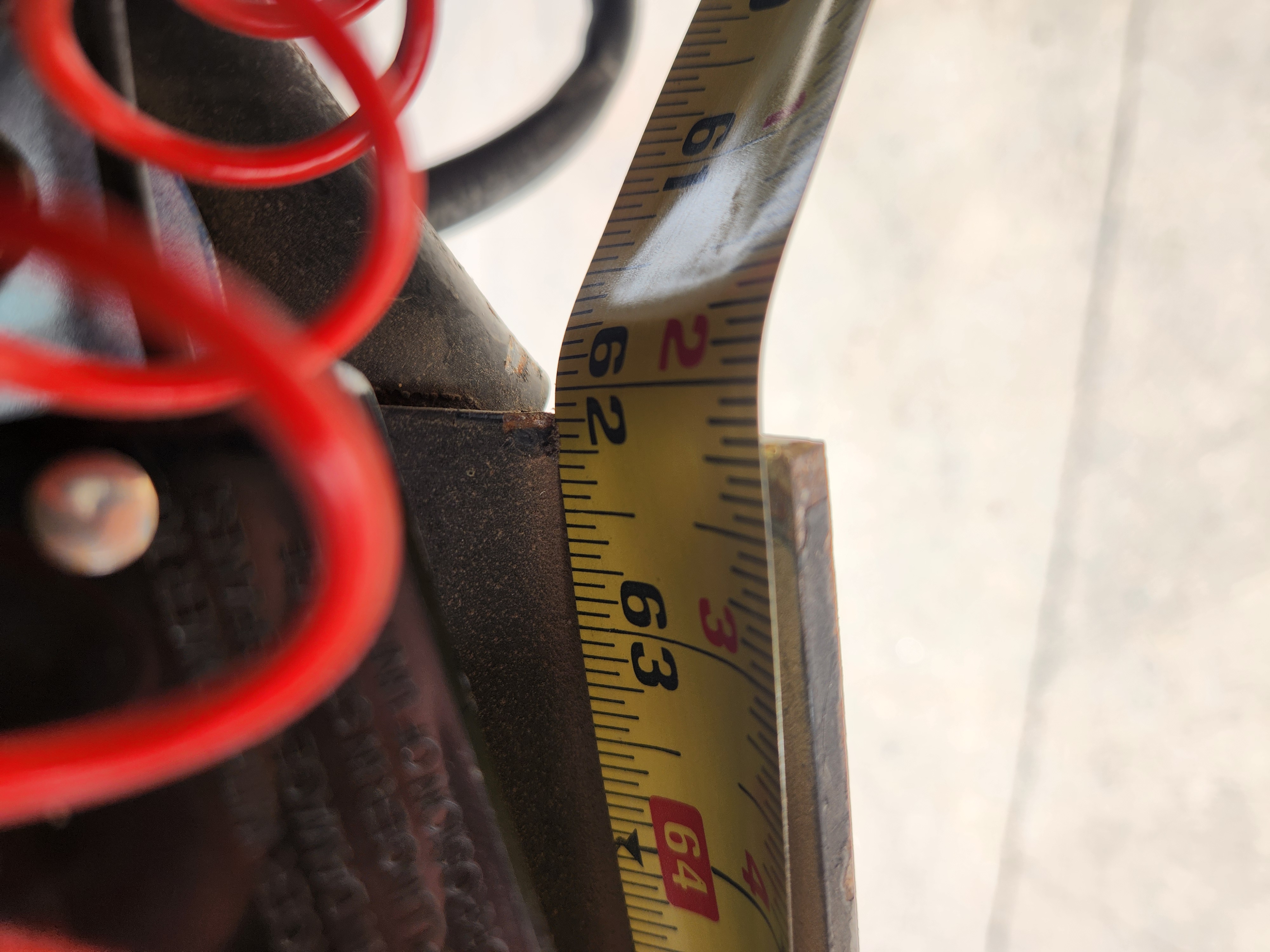
Frame flex measurement on the ground: 62⅛"
A client called me to inspect a 2015 Mobile Suite luxury 5th wheel at a local Omaha dealership. I expected to find some issues on a rig this age. I didn't expect the inspection to end early.
Before I could start, the RV had to be moved outside. I took my first frame flex measurement while it was still on the ground: 62⅛" from the pin-box to the frame.
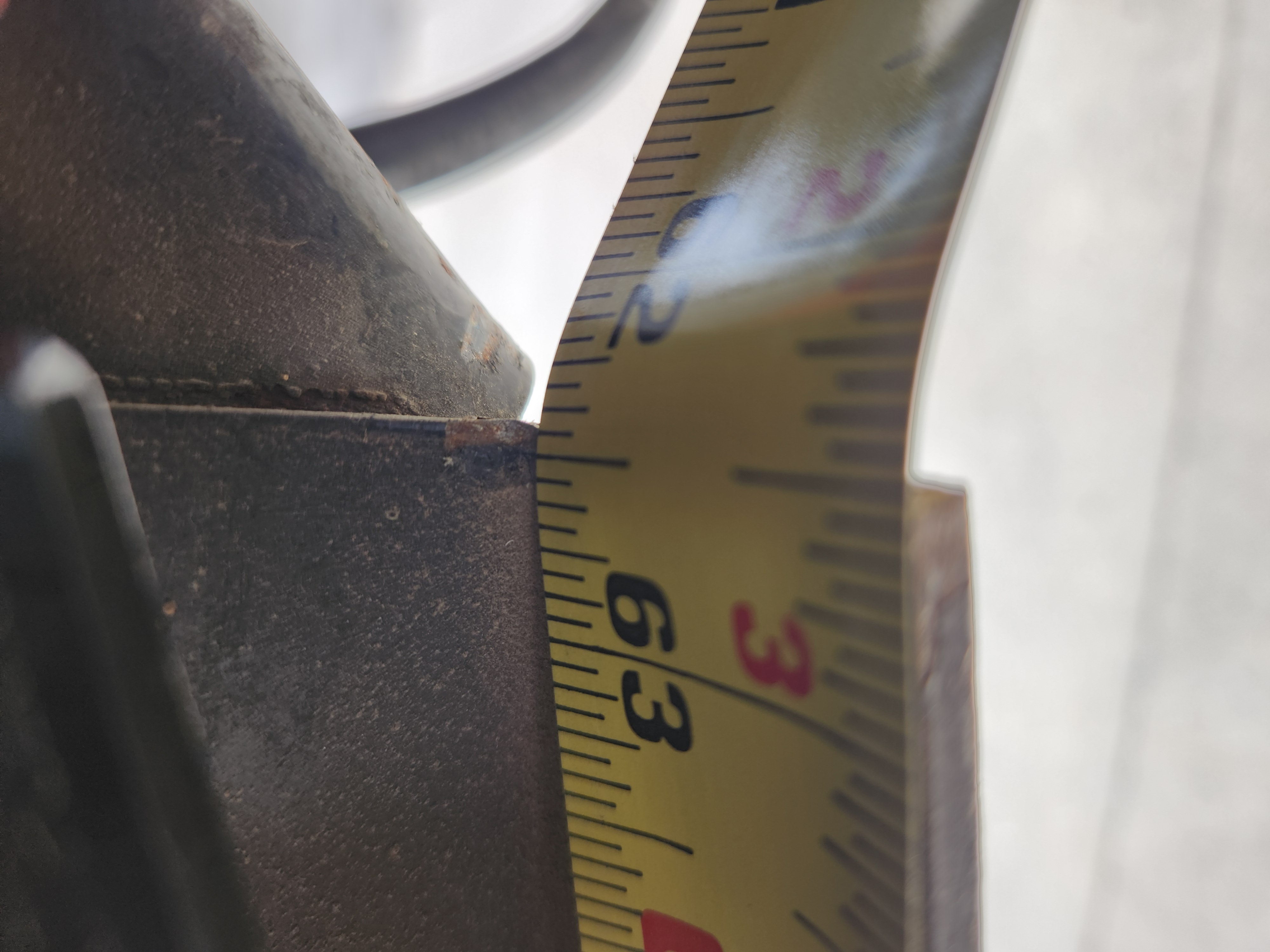
Frame flex measurement while lifted: 62 7/16"
While lifted: 62 7/16". That's a difference of almost ⅜". I want to stress the word almost. That number alone doesn't mean excessive frame flex. It should be expected, and on its own it's not alarming.
The concern came when I walked inside.
Frame flex is exactly what it sounds like, and it's actually by design. A moderate amount of flex creates a smoother ride by absorbing stress and vibrations. To measure it, you take the distance from the pin-box to the frame on the ground, then again while lifted with weight on the hitch.
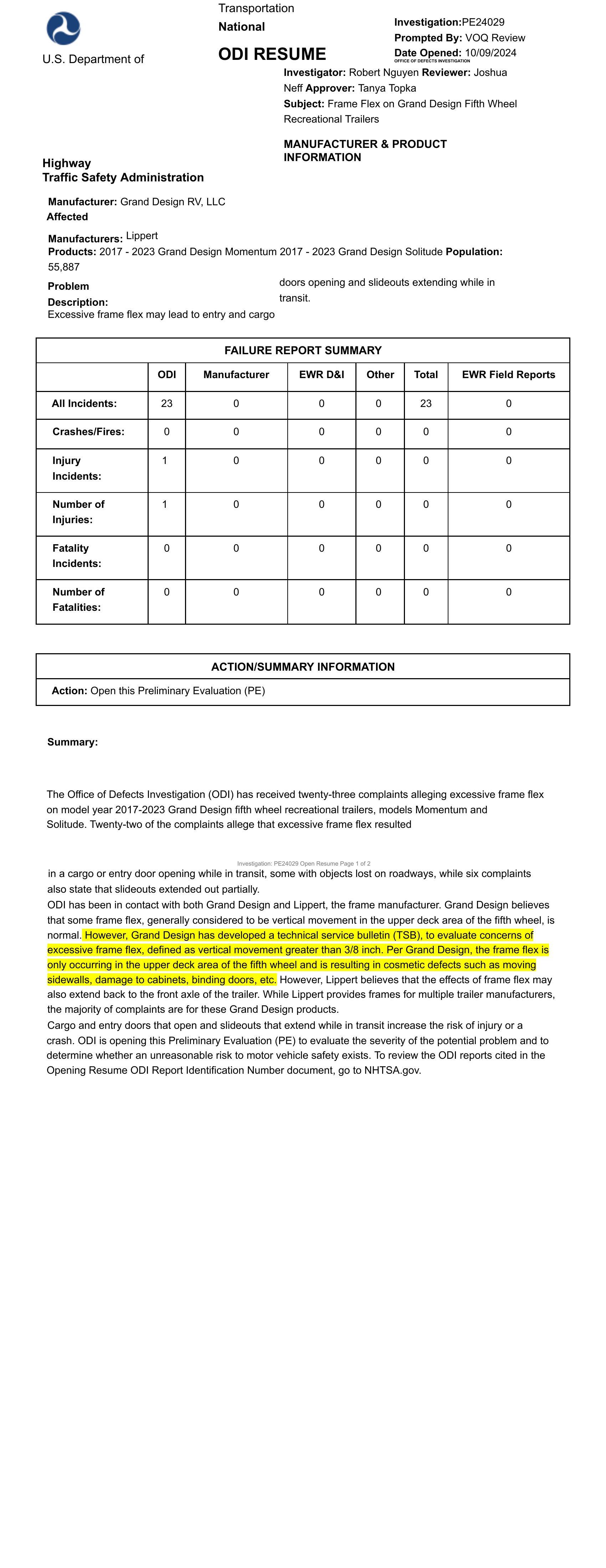
A difference between ¼" and ½" is generally considered acceptable. According to a document from the Office of Defects Investigation (ODI), Grand Design defines excessive frame flex as vertical movement greater than ⅜".
This is why I check frame flex on every inspection.
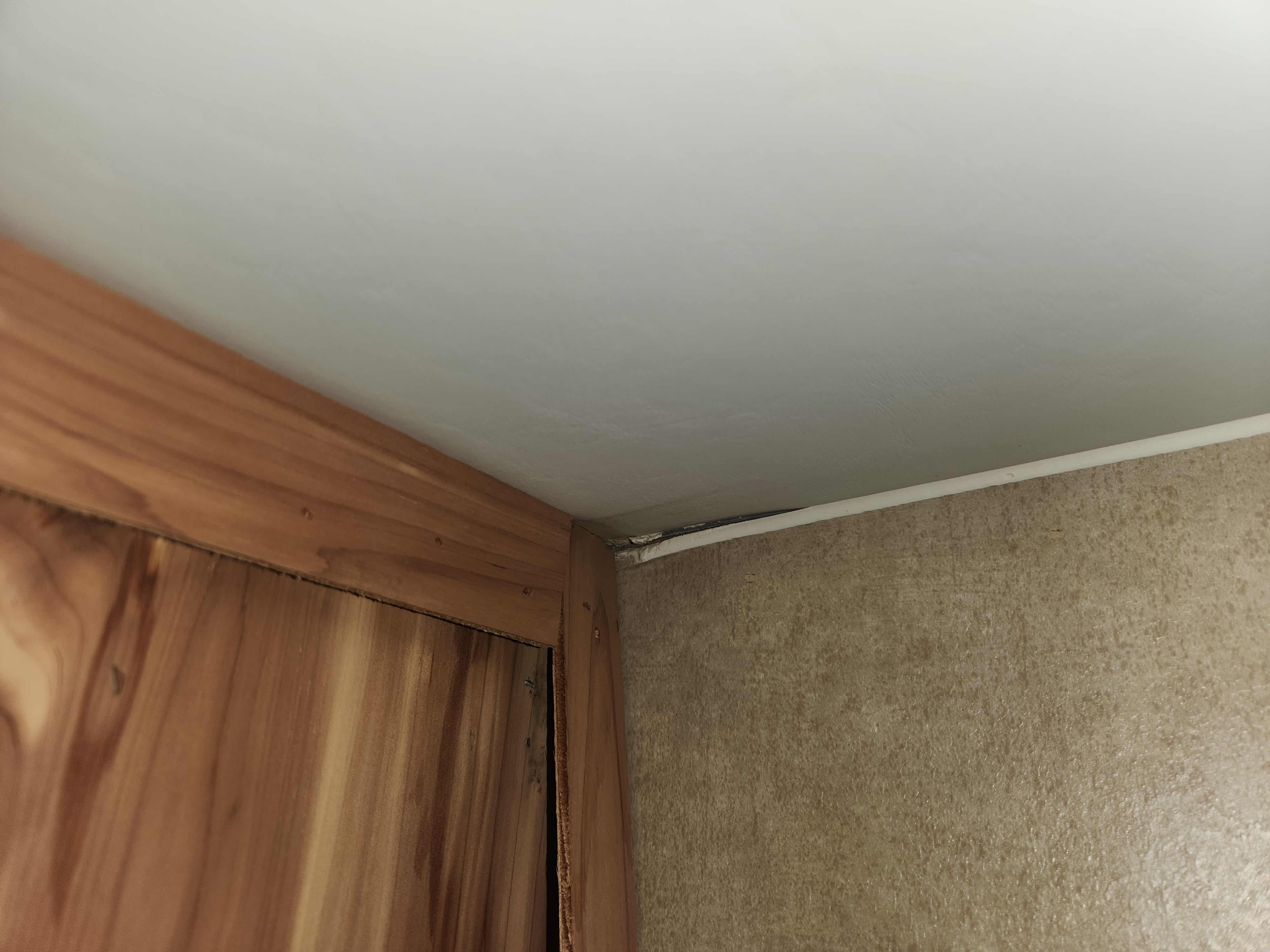
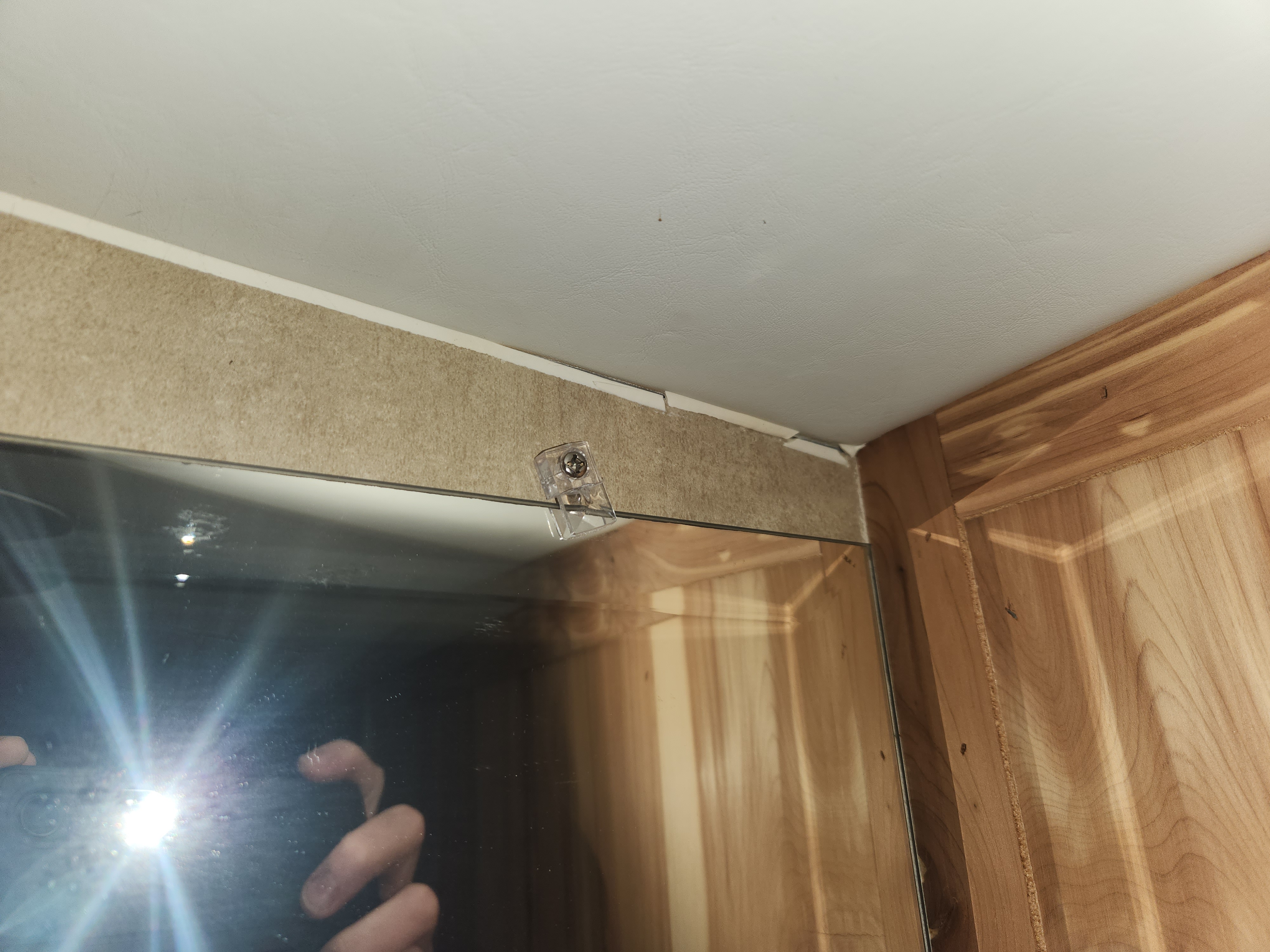
Before they set it back down, I stepped inside and walked to the front bedroom closet. The first thing I saw stopped me in my tracks.
The first and most obvious sign of trouble in the bedroom closet
Ceiling corner while raised
Opposite ceiling corner while raised
When one side created a gap, the opposite side pressed down and closed its gap. It looked like the whole structure was twisting. But the question remained: would it look the same once the RV was set back down? If so, this could just be cosmetic wear on an older unit.
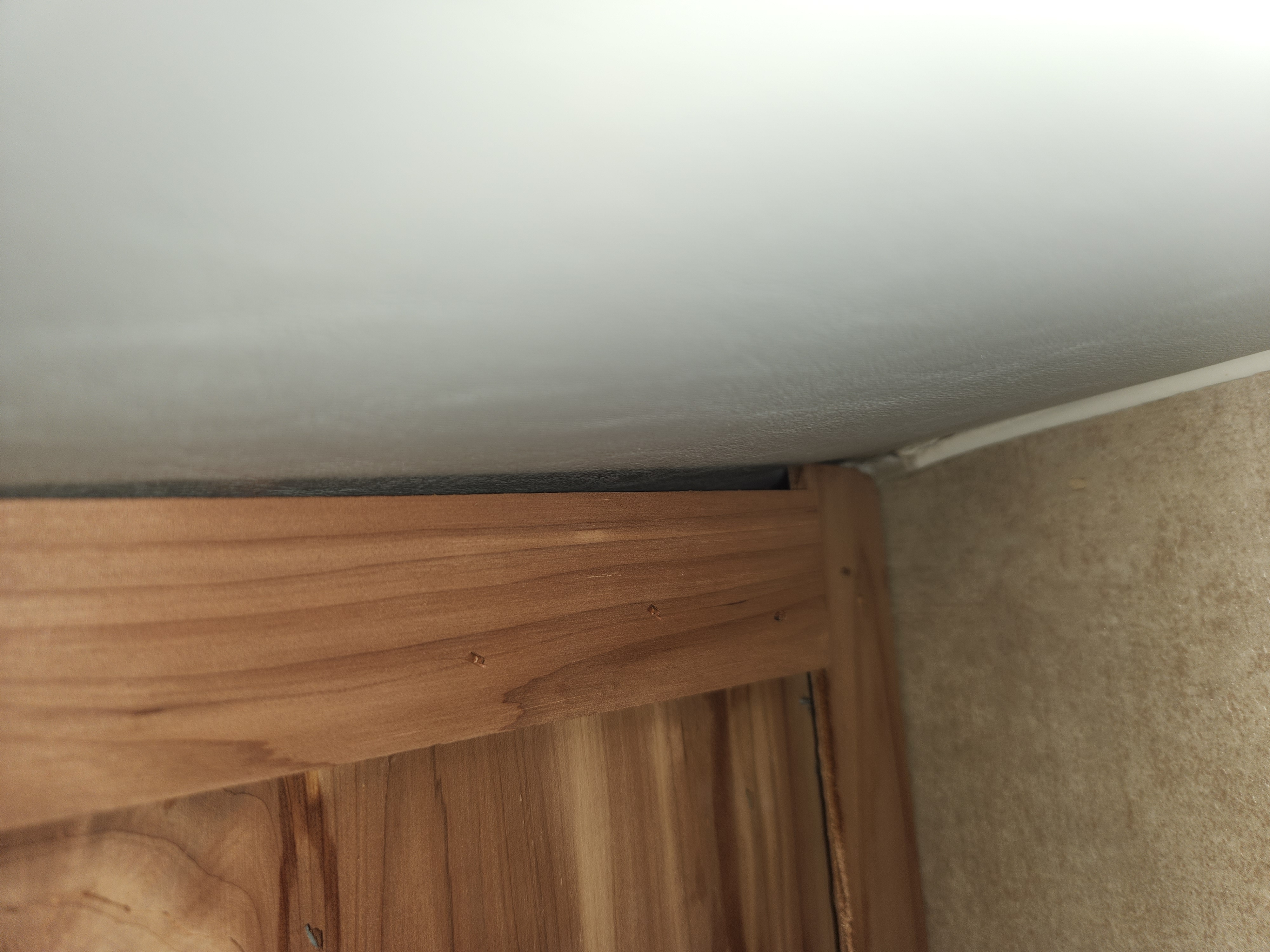
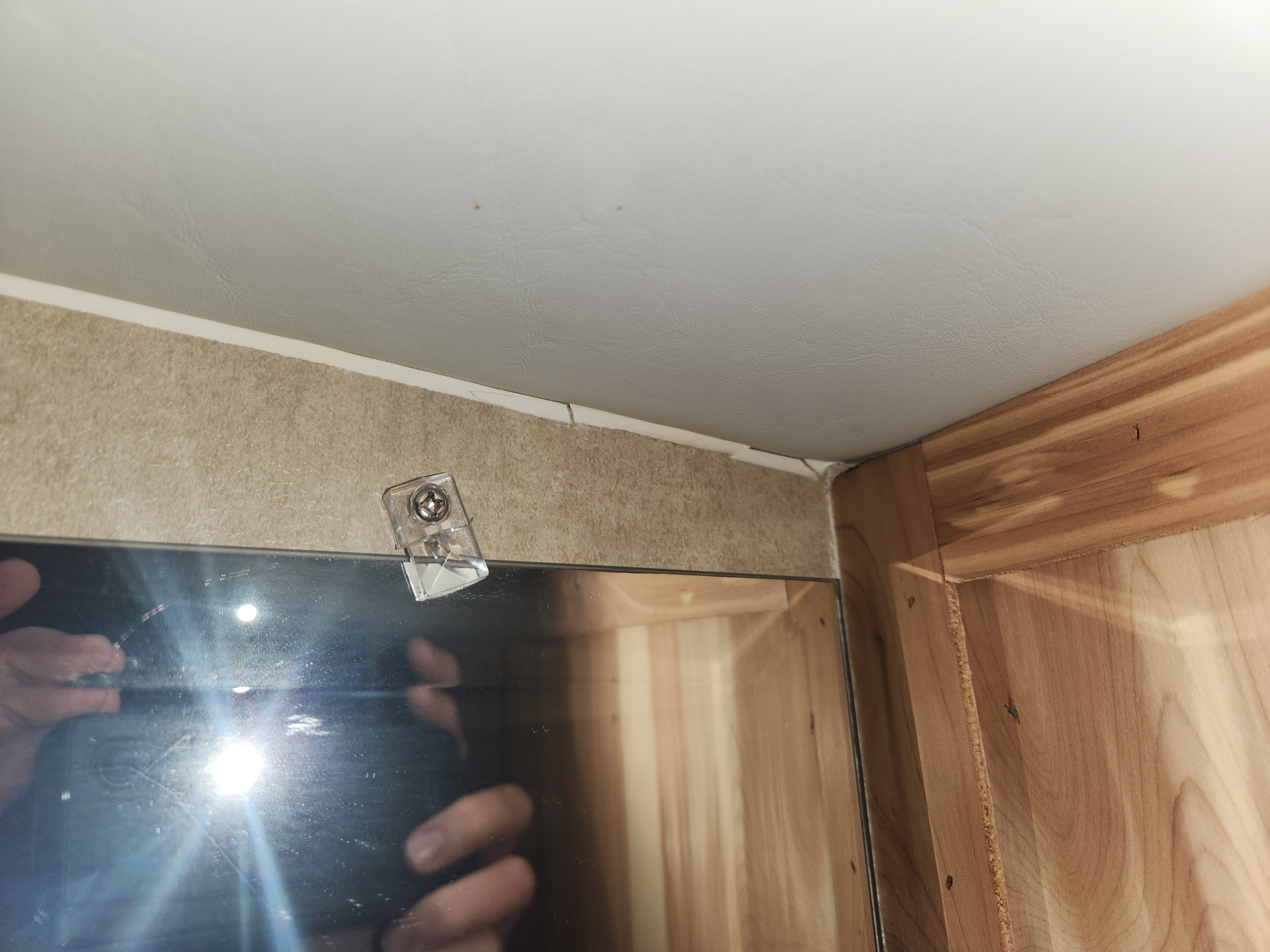
I told them to drop the RV. Once it was down, I stepped back inside. If everything matched what I saw before, I could chalk it up to age. It didn't.
Same trim piece, far less pressure now
Same corner, gap big enough for my pinky
Opposite corner, now completely closed
Compare these with the raised photos above. The damage from frame flex is undeniable.
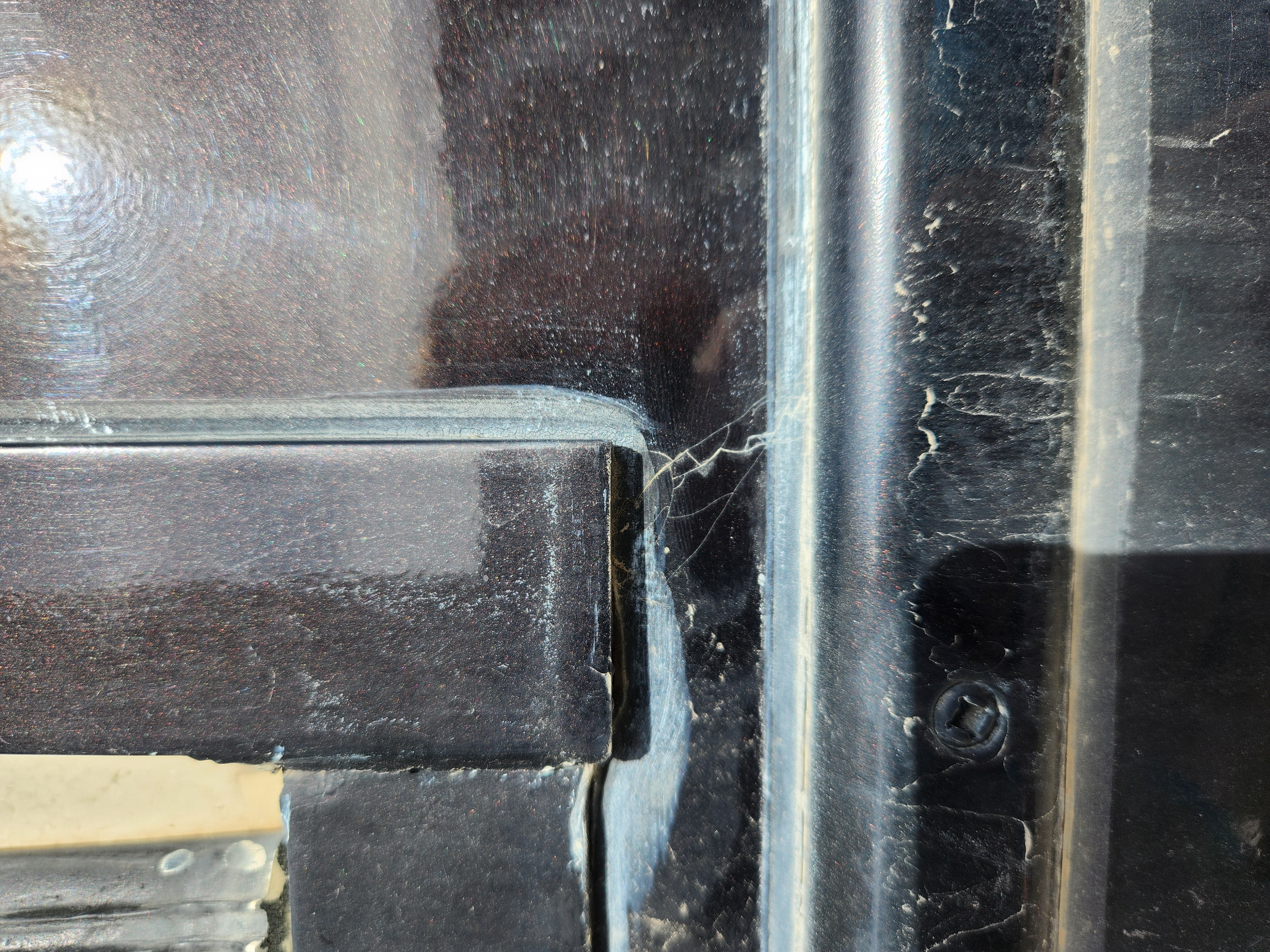
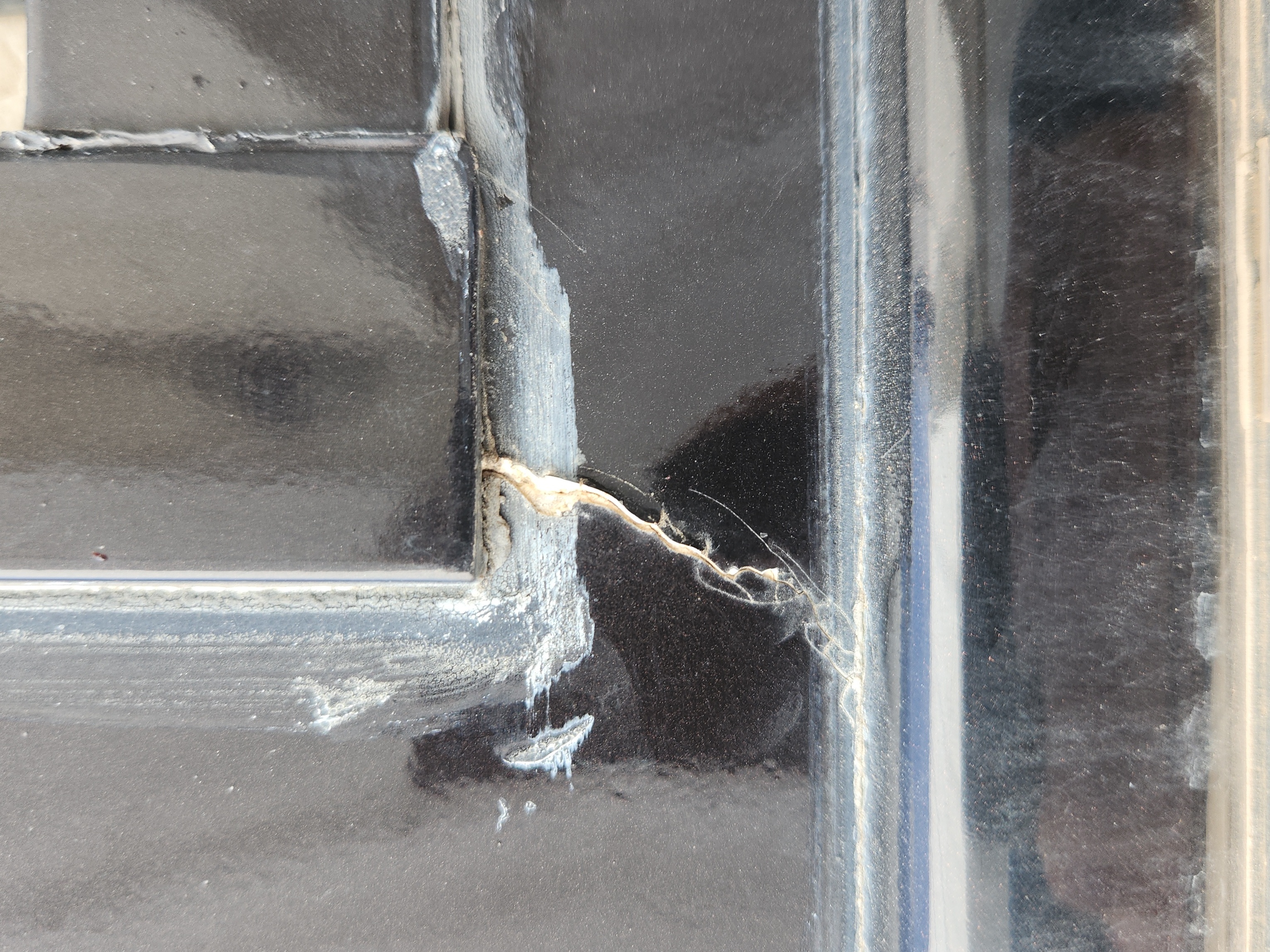
In addition to the interior damage, I found fiberglass cracking just beneath the slideouts on both sides of the RV.
Fiberglass cracking beneath the slideout, side one
Fiberglass cracking beneath the slideout, side two
Cabinets, trim, and walls shift and sustain ongoing damage. The pin-box, a common stress point, deteriorates further over time.
In severe cases, fiberglass cracking develops. Cargo doors and even slideouts have been known to open during transit.
The inspection ended here. I called my client, explained the situation, and charged for a partial inspection. She didn't buy the RV.
This is just one of many reasons to get a third-party inspection before signing for your RV, 5th wheel, or travel trailer.
Get an Inspection from Kowal RV Care